
Ask ten print shop owners why they stock shaka wear blanks and you will get ten answers about hand feel, weight or how the collar holds up after five washes. Almost none of them will say "because the numbers work." That is the gap this article fills. The blank is only half of a DTF job's cost story, and the shops that stay profitable are the ones who treat pricing as a design decision rather than an afterthought.
Below is a practical walkthrough of how Shaka Wear blanks behave in a real cost model, where DTF film and press time quietly eat your margin, and how to structure pricing so a $9 tee does not turn into a $6 profit that disappears the moment a customer asks for a reprint.
Why the blank deserves its own line in your pricing sheet
Most pricing calculators lump everything into one number: cost of goods plus a markup. That works for simple resale, but DTF printing adds variables that a flat markup cannot absorb. A heavyweight tee takes more heat and slightly more time to press than a lightweight one. A dark garment may need a white underbase layer in the transfer, which changes film consumption per print. If your price is the same for every blank in the catalog, you are subsidizing the expensive jobs with the cheap ones.
Shaka Wear's lineup is broad enough that this matters. Their heavier cotton tees press differently than the lighter blends, and the difference shows up in cycle time, not just in the invoice from your supplier. Splitting your pricing into blank cost, transfer cost and labor cost lets you see which combinations actually make money.
A simple three-part cost model
Try this structure the next time you quote a job:
- Blank cost: your landed cost per unit, including freight and any shrinkage allowance you build in.
- Transfer cost: film, powder and ink divided by the number of prints on the sheet.
- Labor cost: press time per unit multiplied by what an hour of your shop's time is actually worth.
Once those three numbers sit side by side, pricing decisions become obvious. A blank that costs two dollars more but presses in eight fewer seconds may be the cheaper option on a 200-piece run. A blank that saves a dollar but requires a second pass through the press is almost never worth it.
The gangsheet is where DTF margins are actually won
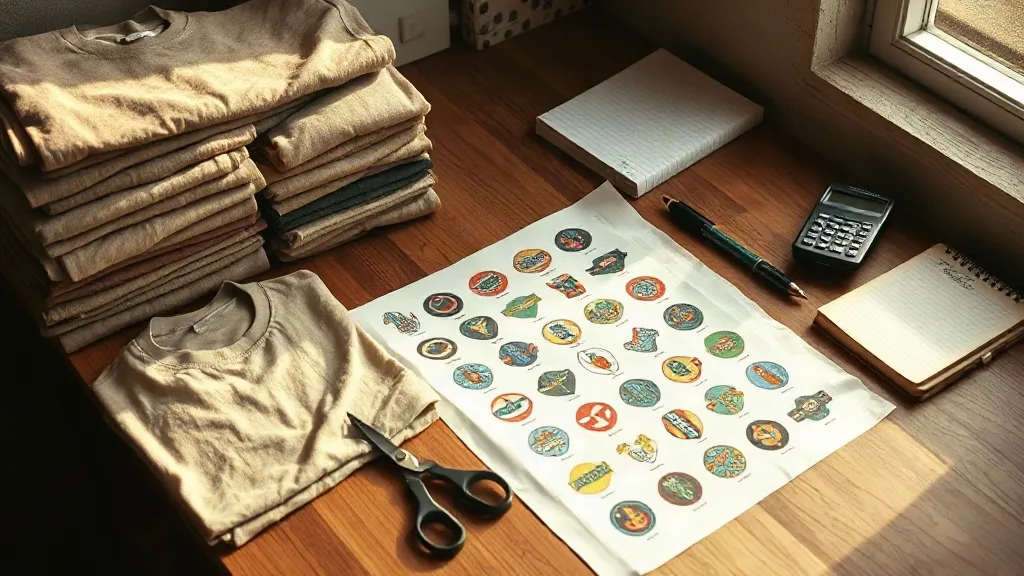
Transfer cost is the line item most shops estimate badly. They think in terms of "one print, one sheet" when the real economics come from packing multiple designs onto a single sheet. This is exactly what a DTF Gangsheet Builder is for: you lay out several designs, sizes or colorways on one sheet, send it to print once, and cut the transfers apart afterward.
The savings compound in three places. Film waste drops because you are not leaving half a sheet empty around a single small logo. Powder consumption drops for the same reason. And press setup time drops because you are handling one sheet instead of five separate print jobs. On a run of mixed-size apparel, that difference can be the gap between a 30 percent margin and a 45 percent one.
How to pack a gangsheet without creating cutting headaches
Packing tight is good. Packing carelessly is not. A few habits keep the sheet efficient and the finishing step sane:
- Group designs by ink coverage. Heavy-coverage artwork next to light line work can cause uneven curing if your powder application is not dialed in.
- Leave consistent gutters between transfers. Tight gutters save film but make clean cuts harder, and ragged edges show on the finished garment.
- Keep a small margin at the sheet edge. Transfers that run to the very border tend to lift or curl during pressing.
- Label the sheet digitally before printing so whoever cuts it knows which transfer belongs to which order.
Where Shaka Wear blanks fit into a margin-friendly lineup
Not every blank needs to be the cheapest or the most premium. A healthy catalog has tiers, and Shaka Wear slots naturally into the middle and upper-middle range where customers expect a solid hand feel and a retail-ready look without a boutique price tag.
That positioning is useful for pricing. When a customer is choosing between a budget blank and a Shaka Wear option, the price difference is easy to justify in conversation: heavier fabric, better drape, a collar that survives repeated washing. You are not upselling on brand alone. You are selling a garment that will not generate complaints three weeks later, and complaints are the most expensive thing in this business.
Matching blank weight to the job
Lightweight blanks suit promotional runs where cost per unit is the deciding factor and the shirt is likely to be worn a handful of times. Midweight blanks cover the bulk of retail and team orders, where the garment needs to feel worth what the customer paid. Heavier blanks make sense for merch drops and anything sold at a premium, because the weight itself communicates value before anyone reads the print.
Pricing should follow that ladder. If your lightweight and heavyweight options are priced within a dollar of each other, customers will always take the heavier one, and you will quietly lose money on every order.
Five pricing mistakes that quietly erase DTF profit
These show up again and again in shops that are busy but not profitable:
- Pricing per print instead of per job. A single small chest logo and a full back print are not the same amount of work, film or ink.
- Ignoring reprint risk. Build a small percentage into every quote for the occasional mispress. If you never charge for it, you are paying for it.
- Forgetting press time on multi-color orders. More color changes mean more handling, and handling is labor.
- Quoting from memory. Blank costs move. If your price sheet is six months old, your margins are a guess.
- Undercharging for small runs. Setup does not shrink because the order is small. A ten-piece order carries the same fixed costs as a hundred-piece order spread across ten times fewer units.
Building a price sheet you can defend
A defensible price sheet does not need to be complicated. It needs to be honest about the three cost buckets, consistent across blank tiers, and easy to update when supplier pricing shifts. Shops that get this right usually find they can raise prices slightly and lose almost no customers, because the customers who care about quality were never shopping on price alone.
Start with your two most common jobs, a single-location print and a full-front or full-back print, and build the math out from there. Once those two are accurate, every other combination is a variation rather than a new problem. The blank you choose sets the floor on quality. The pricing structure you build around it sets the ceiling on what your shop can actually earn.
Frequently asked questions
Is it worth using premium blanks like Shaka Wear for low-volume orders?
Often yes, but for a different reason than margin. Small orders are usually custom or personal, and the customer is judging the finished garment, not the unit cost. A better blank reduces the chance of a complaint or a remake, which on a ten-piece order can wipe out the entire profit. Price the premium blank honestly and let the customer decide.
How much does a gangsheet actually save per shirt?
It depends on how much empty space your current layouts leave. Shops that move from single-design sheets to tightly packed gangsheets commonly see film and powder costs drop noticeably per transfer, plus a real reduction in press setup time. The exact figure varies by design size and sheet dimensions, so measure your own before-and-after rather than assuming a number.
Should I charge differently for dark and light garments?
If your dark-garment transfers require a white underbase layer, yes. That layer adds ink, powder and print time. Many shops build a small dark-garment surcharge into their sheet rather than explaining it per order, which keeps quoting fast and keeps the math honest.
How often should I update blank costs in my pricing?
Review supplier pricing at least quarterly, and immediately after any noticeable increase. Freight changes and mill availability both affect landed cost, and a price sheet built on stale numbers gives you a false sense of your real margin.
What is a reasonable target margin for a DTF printed tee?
It varies by market and order size, but many shops aim for a gross margin in the range of 40 to 55 percent on printed apparel after accounting for blank, transfer and direct labor. Below that range, reprints and slow jobs tend to push the business into unprofitable territory once overhead is included.