
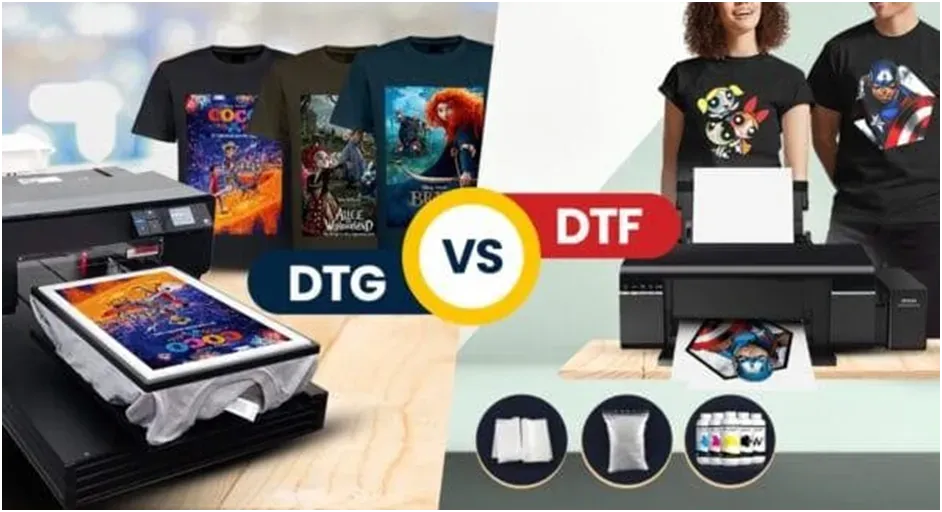
In the competitive realm of custom apparel, understanding the nuances between DTF and Direct-to-Garment printing is essential for businesses aiming to maximize the quality and efficiency of their print jobs. Direct-to-Garment (DTG) printing employs advanced inkjet technology to achieve vibrant and intricate designs directly onto fabric, primarily cotton, while Direct-to-Film (DTF) printing revolutionizes the process by transferring designs from a specialized film onto a variety of materials through heat application. This comparative analysis dives into the print quality comparison between DTG and DTF methods, enabling manufacturers and retailers to determine the best fit for their needs. With a growing emphasis on garment printing technologies, knowing the strengths and weaknesses of DTG vs DTF can significantly impact production decisions. By exploring the intricacies of these methods, businesses can stay ahead in the custom printing landscape.
When navigating the world of custom clothing production, two prominent printing techniques often come to the forefront: Direct-to-Film (DTF) and Direct-to-Garment (DTG) printing. These innovative approaches cater to varying needs in the garment industry, offering unique solutions for high-quality prints on diverse materials. Understanding the strengths of DTF and DTG is vital for professionals seeking the best results for their printing projects. This article provides insights into a print quality comparison and the operational differences between these two garment printing technologies, ensuring that stakeholders are well-equipped to make informed choices. By examining the capabilities and limitations of each technique, businesses can align their printing strategies with customer demands and production goals.
Understanding Direct-to-Garment Printing (DTG)
Direct-to-Garment (DTG) printing is a modern technique that revolutionizes how designs are applied to textiles. This method relies on inkjet printing technology to apply ink directly onto fabric, predominantly cotton, allowing for high-resolution images and intricate designs. The process begins with pre-treatment, which ensures the ink adheres properly to the fabric, especially on dark materials. Following this, a heat curing process helps to set the ink, resulting in vibrant colors and a soft finish that feels integrated with the garment.
The strength of DTG printing lies in its capability to produce stunning, detailed graphics that are particularly appealing to consumers seeking custom apparel. Whether it’s a complex design with multiple colors or a high-definition photograph, DTG facilitates impressive visual quality that meets the general expectations for custom clothing. However, potential users should note that DTG printing excels on 100% cotton fabrics and may not perform optimally on synthetic materials, which could limit its applicability in certain product lines.
Exploring Direct-to-Film Printing (DTF)
Direct-to-Film (DTF) printing represents a significant advancement in the garment printing landscape, distinguishing itself by its flexibility and broad fabric compatibility. This process involves printing the desired design onto a special release film that can subsequently be transferred to a variety of textile surfaces using heat. One of the primary advantages of DTF printing is its ability to work effectively with synthetic fabrics, blends, and even leather, providing businesses with a versatile option for diverse printing applications.
The DTF method allows for quicker production times since the printed film can be prepared in advance and applied to multiple garments rapidly. As a result, this technology is especially appealing for businesses dealing with large orders or requiring quicker turnaround times. While DTF prints may maintain a slightly tactile surface feel due to the film layer, advancements in ink quality and application techniques are helping to improve the finish, ensuring that vibrant outputs remain a key selling point.
### Print Quality Comparison: DTG vs. DTF Printing
Both DTG and DTF printing methods offer unique characteristics in print quality, a critical factor influencing consumer purchases. DTG printing is renowned for its exquisite detail, producing designs that appear seamlessly embedded into the fabric. This is particularly crucial for intricate artwork where precise color gradients are essential. The soft hand feel of DTG prints ensures comfort, making them ideal for apparel enthusiasts who prioritize design quality and feel.
In contrast, DTF printing, while capable of producing vibrant colors and sharp images, may have a more pronounced texture due to the film substrate. However, it compensates for this with its durability and resistance to wear, performing well after multiple washes. As businesses consider print quality, understanding the distinct outcomes of each method can assist in aligning production techniques with their customer preferences, whether they lean towards the finesse of DTG or the resilient finish of DTF.
Production Speed: A Critical Factor in Custom Printing
When it comes to production speed, the contrast between DTG and DTF becomes apparent. DTG printing typically operates at a slower pace because each garment must go through individual pre-treatment and curing processes. This makes DTG more suited for smaller batch sizes or custom jobs where quality is paramount over quantity. For businesses focusing on craft and personalization, the slower speed of DTG can be mitigated by its superior print resolution and quality.
Conversely, DTF printing excels in production efficiency, particularly beneficial for larger orders where speed is essential. The ability to pre-print films allows for quick application to numerous garments in a single heat press operation. Consequently, businesses with high demand can significantly reduce turnaround times, a compelling reason for companies to adopt DTF technology, especially in competitive markets where timely delivery can enhance customer satisfaction.
Cost Effectiveness: Evaluating Investment in Printing Technologies
Cost considerations are pivotal when selecting between DTG and DTF printing technologies. DTG printing involves a higher initial investment due to the equipment and maintenance costs associated with high-quality inkjet printers. However, it offers lower variable costs for smaller runs, making it cost-effective for businesses that produce custom items. The challenge arises when attempting to scale production, as longer print times can escalate operational expenses.
On the other hand, DTF printing generally presents lower startup costs, appealing to new entrants in the garment printing industry. As demand for this technology grows, cost efficiencies in materials and processes are making DTF an attractive option for medium- to large-order runs. Businesses can maximize profitability while catering to diverse fabric needs, thus effectively enhancing their operational capabilities without overwhelming their budgets.
Durability in Prints: Ensuring Quality Over Time
Durability is a crucial aspect that businesses consider when selecting printing methods. DTG prints are designed to withstand washing; however, they may fade or deteriorate over time if not properly maintained. The longevity of a print is directly affected by care instructions and the quality of pretreatment and inks used. Educating customers on proper washing and handling can help extend the lifespan of DTG prints, providing assurance of quality to consumers.
Meanwhile, DTF printing is notably recognized for its durability, often lasting through 50 washes or more without significant wear. The robust nature of DTF prints ensures that designs remain vibrant and intact, giving businesses peace of mind in the longevity of their products. This longevity is a decisive factor for bulk orders, where businesses seek to offer customers reliable and enduring apparel solutions.
Innovations in Garment Printing Technologies
The garment printing industry is characterized by continuous innovation, with both DTG and DTF technologies evolving rapidly to meet changing consumer demands. Recently, advancements in hybrid systems that integrate both DTG and DTF capabilities have emerged, offering businesses the flexibility to produce a diverse range of designs efficiently. These hybrid approaches not only optimize workflow but also allow for the personalization of prints tailored to consumer preferences.
Additionally, ongoing research and development in ink formulations, printing machinery, and pre-treatment techniques are enhancing the quality and efficiency of both printing methods. As competitors strive to provide superior product offerings, staying abreast of these technological improvements is essential for businesses aiming to remain relevant in a fast-paced market. With the right investments in technology, companies can enhance their operational effectiveness while meeting a broad spectrum of customer needs.
Frequently Asked Questions
What are the key differences between DTF vs. Direct-to-Garment Printing?
The main differences come down to the application process and fabric compatibility. DTF (Direct-to-Film) involves printing designs onto a film which is then transferred onto fabric using heat. This method works on various materials, including synthetics, whereas DTG (Direct-to-Garment) applies ink directly onto fabric, primarily cotton. Therefore, DTG is better for intricate designs on cotton, while DTF is more versatile.
Which method offers better print quality: DTF vs. Direct-to-Garment Printing?
When comparing print quality in DTF vs. Direct-to-Garment printing, DTG typically delivers finer details due to its direct ink application, resulting in softer prints that blend well with fabric. However, DTF can still produce vibrant images, albeit with a slightly different tactile feel due to the film layer.
How does production speed differ between DTF vs. Direct-to-Garment Printing?
Production speed is a notable factor when comparing DTF vs. Direct-to-Garment printing. DTF allows for quicker operations since pre-printed films can be transferred rapidly to multiple garments. In contrast, DTG is slower due to individual treatment required for each garment, making it suitable for smaller batches or custom orders.
In terms of cost, which is more cost-effective: DTF vs. Direct-to-Garment Printing?
DTF is generally more cost-effective for medium to large runs due to lower startup costs and faster production. Conversely, while DTG has higher initial equipment costs, it can be manageable for small batches. However, for large orders, DTF is the preferable option due to its efficiency and lower variable costs.
What type of fabric compatibility can be expected from DTF vs. Direct-to-Garment Printing?
DTF boasts a wide fabric compatibility, working well on various textiles including blends, synthetics, and leather. In contrast, DTG is best suited for 100% cotton fabrics, and users should be cautious about its performance on synthetic materials.
Which printing technology is more durable: DTF vs. Direct-to-Garment Printing?
Regarding durability, DTF generally outperforms DTG. DTF prints can withstand more than 50 washes without significant wear, making them reliable for long-term use. DTG prints, while they can endure washing, might fade or deteriorate faster if not treated correctly.
| Key Factors | Direct-to-Garment (DTG) | Direct-to-Film (DTF) |
|---|---|---|
| Print Quality | Phenomenal detail, soft feel | Vibrant images but slightly tactile feel |
| Production Speed | Slower, ideal for smaller batches | Faster, ideal for larger runs |
| Cost Effectiveness | Higher initial costs, manageable variable costs | Lower startup costs, efficient for medium to large orders |
| Durability | May fade over time, needs proper treatment | Lasts over 50 washes, more durable |
| Fabric Compatibility | Excels on 100% cotton | Works on a variety of materials, including synthetic |
Summary
DTF vs. Direct-to-Garment Printing are two prominent methods in the custom apparel industry, each with distinct characteristics suited for different production needs. While DTG printing is renowned for its exceptional detail and quality, particularly on cotton fabrics, it tends to be slower and less efficient for bulk orders. On the other hand, DTF printing offers remarkable versatility and speed, making it an excellent choice for a variety of textile types, including synthetics and blends. The choice between the two ultimately depends on specific business requirements, such as the type of designs, fabric compatibility, and production volume needs, ensuring that companies can select the most efficient and practical printing solution available.

