
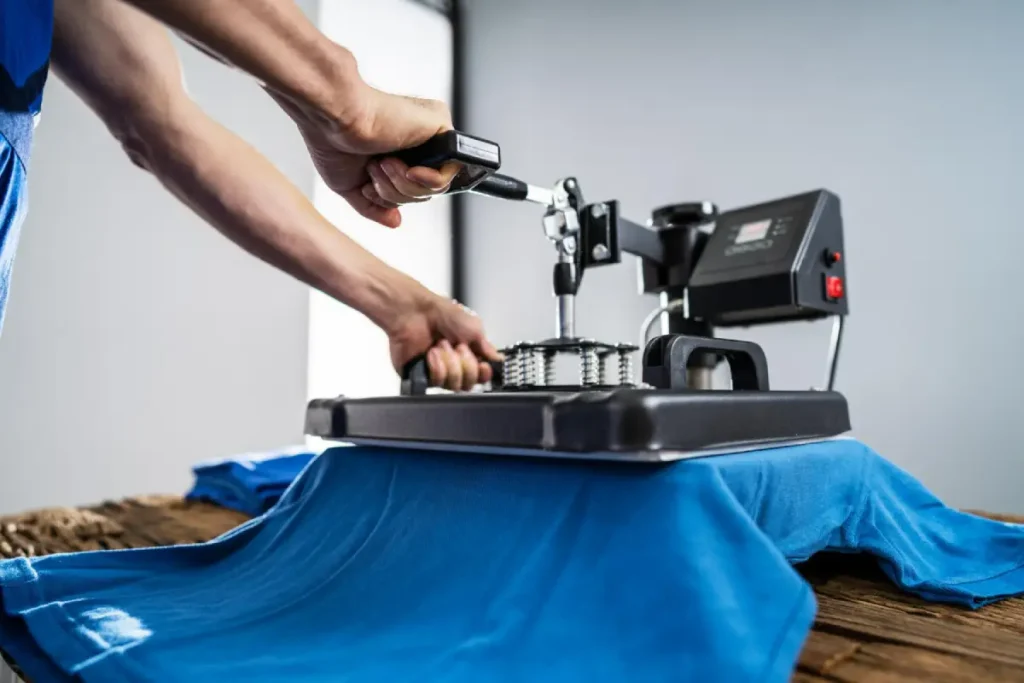
The apparel decoration sector is currently undergoing a structural transformation. For years, the barrier to entry was defined by heavy machinery and the manual labor of screen setup. Today, the dtf printing paradigm has flipped that dynamic, allowing boutique brands to match the complexity and color accuracy of industrial giants. Yet, a critical trap persists: many business owners treat the heat press as a generic tool, failing to realize that apparel manufacturing is an exercise in applied physics.
To reach a premium market tier, you must stop “printing” and start “engineering.” The difference between a retail-grade garment and a promotional throwaway lies entirely in the mechanical bond between the transfer and the textile. When you utilize dtf transfers, you are essentially deploying a high-performance polymer into the fabric weave. If that deployment isn’t calibrated, you’re not building a brand; you’re building a liability.
The Technical Architecture of Durability
The most common failure point in boutique apparel isn’t the print quality—it’s the failure to manage the “Thermal Budget” of the garment. Every fabric type has a unique density and thermal conductivity. If you press a heavy, ring-spun cotton tee with the same parameters as a thin, moisture-wicking polyester athletic shirt, one will fail. Elite brands use a “Fabric-Specific Matrix” to dictate production.
To master this, you need to transition to a data-first approach:
- Moisture Normalization: Never press a “raw” garment. Always use a 5-second pre-press to ensure the fibers are dry and consistent before the transfer touches the surface.
- Mechanical Locking: The transfer doesn’t just “stick”; it needs to be forced into the fiber gaps. Use a press with a digital PSI readout to ensure that you aren’t just applying heat, but actual force.
- The Cooling Phase: Peeling while hot is the most common amateur mistake. Allowing the transfer to hit room temperature is where the chemical bond transitions into a physical lock.
The Strategic Power of “Near-Me” Supply Chains
The apparel industry is plagued by “inventory bloat,” where brands tie up all their cash in thousands of pre-printed units. The smartest way to bypass this is by leveraging a dtf transfers near me strategy that prioritizes regional partnerships over distant, anonymous shipping. When you have a high-end printing partner a short drive away, you’re not just buying supplies—you’re buying an R&D department.
This proximity allows you to “stress-test” new styles in real-time. Need a matte finish for a limited-edition drop? Need to test a high-stretch adhesive for a new line of yoga apparel? You can have that data in your hands by the end of the day. This operational agility is exactly what allows boutique labels to move faster than the retail giants. Harwin champions this partnership model because it minimizes your risk while maximizing your creative output.
Establishing Scalable Governance
Scalability is impossible if your quality depends on the intuition of one person. If your brand’s quality is tied to the memory of one operator, your production is capped. To break through, you must document your “Technical Recipes.” Every piece of apparel you offer should have a corresponding data card that lists exactly how it was produced: the temperature, the exact pressure, and the cooling duration.
Furthermore, treat “Failure Analysis” as a core business process. When a garment returns with a peeling print, don’t just replace it—investigate it. Use a magnifying glass to check for fiber lift (which means the bond wasn’t deep enough) or surface cracking (which means the adhesive was too rigid for the fabric). When you turn every failure into a piece of data, your production line becomes smarter, faster, and more profitable every single month. That is how you dominate your market.
Frequently Asked Questions
Why does “pre-pressing” make a measurable difference in durability?
Textiles hold residual moisture from the manufacturing and shipping process. If you don’t remove that moisture, it turns into steam the moment your 300°F heat press hits it. Steam acts as a microscopic barrier, preventing the adhesive from ever touching the actual fabric fibers.
How can I tell if my adhesive bond is “Retail Grade”?
Perform a “Stretch-Recovery Test.” Pull the fabric firmly. If the graphic stretches and retracts back to its original shape without cracking or creating a white “webbing” effect, your adhesive bond is deep and elastic. If it cracks, your bond is superficial.
Is DTF better for high-end fashion or just promo wear?
It is increasingly the choice for high-end fashion because of its ability to replicate full-color, photographic detail that is impossible to achieve with screen printing without massive costs. The key is in the finishing—using matte-additive powders makes the print look like a professional dye-sublimation finish.
What is the most effective way to audit my production?
Implement the “Industrial Wash Protocol.” Select one unit from every batch and put it through a heavy-duty cycle with abrasive items (like jeans or towels) and high-heat drying. If it survives 10 cycles, you have the data needed to promise retail-tier durability to your customers.
Building a successful, high-quality apparel brand is a journey of continuous technical refinement. By mastering the potential of dtf, you position your brand to compete at the highest level of the custom merchandise market. Harwin is committed to providing the industry insights you need to turn your production floor into a professional, profitable enterprise. Start optimizing your workflow today—your commitment to quality is the most valuable investment you can make for your brand’s future.